The Painful Tooth Fairy
Acronyms expanded in this post:
- AI: Artificial Intelligence. software that generates, classifies, predicts, summarizes, or acts on patterns in data.
- IT: Information Technology. the practice of building, operating, and supporting computing systems.
A toothache is the body’s most intimate form of municipal harassment: small, local, badly governed, and somehow capable of ruining the entire city.
At fifty-one, I had assumed my grand humiliations would have some narrative dignity. A failed enterprise, perhaps. A late-career technological obsolescence, with artificial intelligence standing over my professional corpse like a cheerful intern with better syntax. A noble collapse of masculine purpose in the damp heat of Calcutta, where every ceiling fan appears to be rotating not air but ancestral disappointment. I did not expect to be defeated by one tooth, a tiny enamel thug lodged in the jaw like a corrupt councillor who has discovered tenure.
But there it was.
Pain.
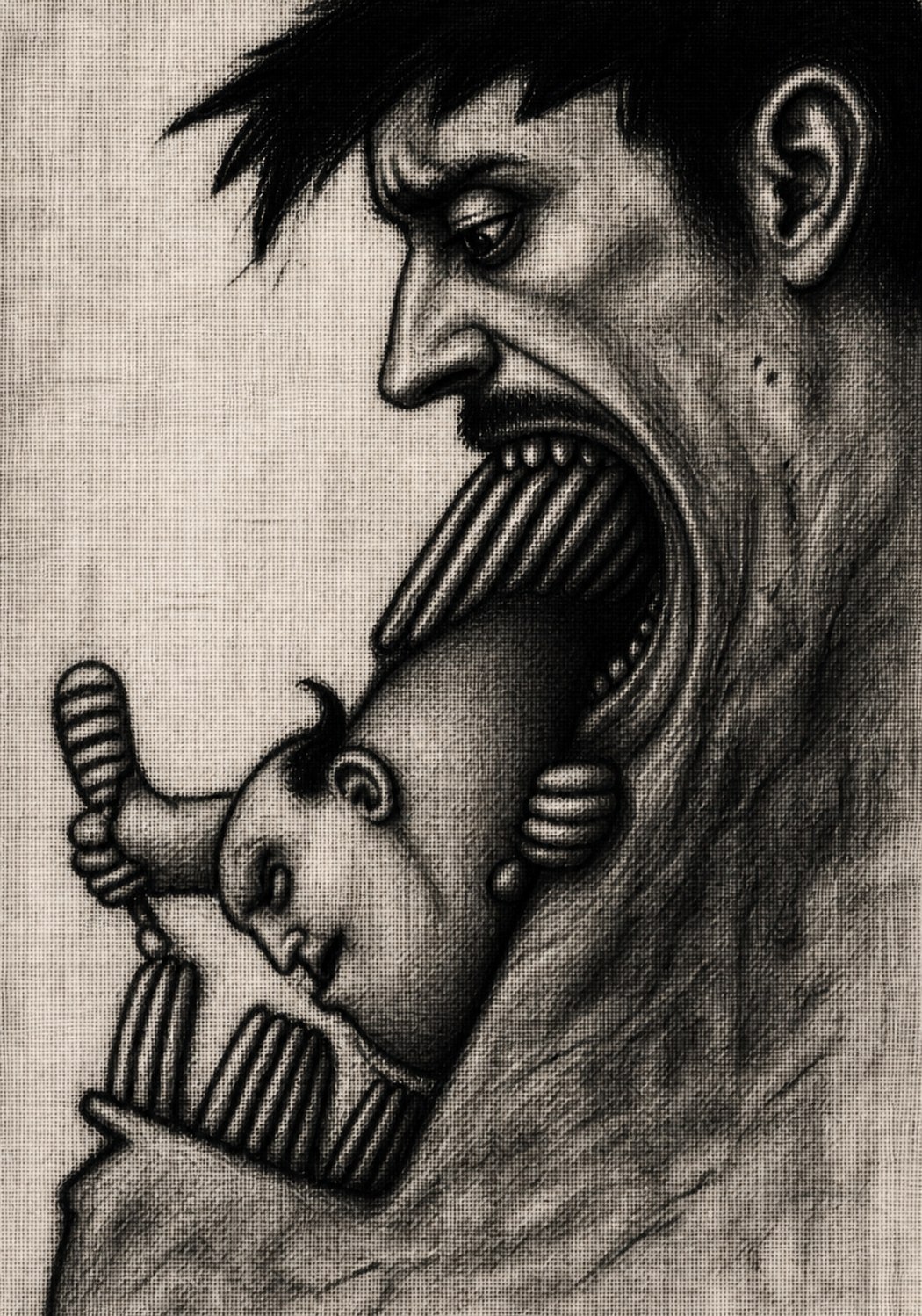
Not the operatic kind one imagines while young, when suffering still wears a velvet coat and quotes philosophers. This was not Schopenhauer’s cosmic pessimism, not Dostoevsky in a room with a candle, not some elegant German sentence about the will gnawing at itself through the machinery of desire. This was a dirty nail hammered upward through the gum. This was a small demon with office hours. This was the painful tooth fairy arriving not with a coin beneath the pillow but with a ledger, a flashlight, a pair of pliers, and the calm suggestion that everything deferred eventually becomes principal plus interest.
The insulting thing about dental pain is its precision. Back pain sprawls. Fever generalizes. Depression fogs the whole landscape until even the tea looks like it has given up. A toothache points. It knows the address. It has the flat number, the voter identification, the Aadhaar card, the family tree, and the original land deed. It sends one pulse into the jaw, another into the ear, a third into the temple, and soon the whole head becomes a badly wired colonial building where every switch turns on the same red bulb.
One learns very quickly that civilization is partly the absence of toothache. We praise literature, democracy, rocketry, constitutional morality, Wi-Fi, indoor plumbing, and the invention of the spreadsheet, but the real measure of a society may be simpler: can a middle-class man with a throbbing molar see a dentist without first performing mental arithmetic so humiliating that even the calculator looks away?
Dentistry occupies a curious moral category. It is medicine, but with the emotional atmosphere of a jewelry store. Everything gleams. Everything reclines. Everything hums. There are polished floors, polite receptionists, blue gloves, white light, tiny mirrors, and the silent understanding that the mouth is not merely a biological aperture but a financial event. A dentist’s chair is one of the few places where one lies down voluntarily while knowing that both pain and expense are now leaning over one’s face.
The poor, of course, do not have dental problems in the way magazines describe dental problems. They have endurance contests. They chew from the other side. They gargle with salt water. They crush cloves. They take tablets recommended by a cousin whose medical training consists of once having had a fever in 1997. They wait. They wait until the small local rebellion becomes an armed insurgency. Then they go to a government hospital, or to a cheaper clinic, or to a man in a lane who has certificates on the wall and God in the drawer. They sit under tube lights and discover that pain has a queue number.
The lower middle class has a more theatrical version of the same suffering. It possesses just enough education to understand what should happen and just enough money to know that it may not. This is the most literary social condition, unfortunately. The genuinely rich outsource dread. The very poor are conscripted by necessity. But the lower middle-class man is left with analysis, which is the art of being stabbed and describing the knife.
So I write.
Naturally.
What else is a fifty-one-year-old man in Calcutta supposed to do when a tooth turns into a percussion instrument and the cost of repair begins to look like a small infrastructure project? He writes a wall of wailing text. He wallows with discipline. He becomes his own complaint department. He converts pulpitis, decay, cracked enamel, infection, deferred maintenance, civic pessimism, and personal financial embarrassment into paragraphs, because paragraphs are cheaper than root canals and, unlike relatives, do not interrupt with advice.
There is something almost comic about the phrase “root canal.” It sounds agricultural. One imagines a government irrigation scheme, some honest work involving canals, silt, bureaucracy, and men in khaki. But in the mouth, the root canal is a heroic little plumbing repair conducted in a cave full of nerves. The dentist enters like an engineer into a collapsed tunnel, removes dead or infected pulp, cleans the canals, seals the structure, and then bills you for saving a tooth that has behaved like an enemy combatant. It is both miraculous and financially vindictive.
The alternative is extraction, which has a brutal honesty. The tooth has failed negotiations. The state has lost confidence. It is removed from office. There is blood, gauze, antibiotics if needed, a warning about not spitting too vigorously, and the melancholy knowledge that one more original part has left the republic.
By fifty-one, originality itself becomes a diminishing inventory. Hair thins. Knees develop political opinions. Sleep becomes delicate. The stomach files objections to things it once accepted as routine. The eyes require little glass intermediaries for every document, medicine strip, electric bill, and existential threat. One begins to understand the body not as a temple, which was always a suspiciously flattering metaphor, but as an old house in north Calcutta: beautiful in places, cracked in many, full of unauthorized wiring, inherited leaks, stubborn corners, sentimental furniture, and one room that smells faintly of something no one wants to investigate.
The tooth is part of that house. It remembers everything. Childhood sugar. Cheap sweets. Tea. Neglect. Tobacco if there was any. Bad brushing. Good intentions. Years of saying “later.” The mouth is where time keeps its small white accounts.
And Calcutta, bless its damp, argumentative, beloved, exhausted soul, understands deferred maintenance better than most cities. The city does not collapse dramatically. It flakes. It seeps. It leans. Paint peels from buildings with the dignity of old aristocrats losing skin. Pavements rise and fall like badly translated philosophy. Electric wires hang in black garlands. Tram tracks persist like memories of an intelligence once planned and then politely abandoned. Calcutta teaches you that structures do not fail all at once. They negotiate with decay. They adapt to it. They grow vines around it. They let a tea stall emerge from it.
A tooth does the same.
At first there is sensitivity. Cold water becomes a telegram. Sweets produce a flash of accusation. You adjust. You chew elsewhere. You promise reform. You buy a better toothpaste, as if civilization has ever been rescued by packaging. Then the ache arrives at night, when all cowardices report for duty. Night toothache is different. Daylight allows distraction, argument, errands, scrolling, irritation with the news, the theater of productivity. Night removes the furniture. There is only the dark, the pillow, the jaw, and the pulse. You lie there like a minor character in a Russian novel set inside a dental nerve.
The mind becomes ridiculous. It bargains. Perhaps it is not the tooth. Perhaps it is sinus. Perhaps jaw tension. Perhaps referred pain. Perhaps the entire field of dentistry has been invented to extract money from decent men whose true ailment is atmospheric pressure. Perhaps cloves will solve it. Perhaps warm salt water will persuade the nerve to reconsider. Perhaps I can sleep on the other side and thus confuse anatomy.
Anatomy is rarely confused.
The painful tooth fairy is not a creature of childhood. The childhood tooth fairy, in the imported mythology, rewards biological progress. A child loses a tooth; a coin appears. Growth is monetized in miniature. But the adult tooth fairy is darker. She arrives when the tooth refuses to leave, when decay has settled in like a tenant protected by obsolete law, when the jaw has become a drum, and she whispers that growing old is just childhood in reverse, except now you pay the coin.
And the coin has become large.
This is where the personal becomes political, which is a sentence so overused that one hesitates to touch it without gloves, but the tooth insists. Dental care exposes the little frauds of middle-class dignity. A man may know about databases, neural networks, global politics, Schopenhauer, GitHub, Calcutta history, and the sad decline of public reasoning. He may write lucid sentences. He may have worked in American healthcare systems and survived the acronyms. He may be able to explain why artificial intelligence operates on representations rather than reality. None of this matters when the molar throbs and the estimate arrives.
The tooth does not respect expertise.
It respects cash flow.
There is a special humiliation in being lucid during one’s own discomfort. If one were delirious, one could be tragic. If one were ignorant, one could be simple. But lucidity is a cruel lantern. It illuminates the entire shabby room. You know what the problem may be. You know what could happen if infection spreads. You know delay is unwise. You know the internet is a swamp of half-advice, panic, and product placement. You know painkillers are not a treatment plan. You know antibiotics are not magic mouth perfume. You know all this, and still you sit with the numbers.
This is not stupidity. It is arithmetic under duress.
A society that forces people to calculate whether they can afford relief has already made pain part of its accounting system. We pretend the body is private, but it is never private. The body is an economic document. Teeth especially. They announce class with indecent clarity. Straight teeth, white teeth, preserved teeth, replaced teeth, implanted teeth, crowned teeth—these are not merely dental outcomes. They are biographies in enamel. The mouth is where nutrition, childhood, parental vigilance, public health, vanity, fear, access, money, and luck all gather for inspection.
That may be why dental shame is so deep. A bad tooth feels like moral failure. One imagines the dentist judging not just the cavity but the life. Here lies a man who drank too much tea, postponed appointments, trusted hope, chewed foolishly, flossed irregularly, and believed for long periods that the future would be kinder than it had any contractual obligation to be.
But most so-called personal failures are distributed across time, money, habit, access, fear, and the general human talent for avoidance. Nobody neglects a tooth in the abstract. One neglects it while paying rent, helping family, surviving work, losing work, chasing work, aging, worrying, cooking, commuting, reading, doomscrolling, making tea, pretending things are temporary, and deciding, once again, that tomorrow is the day for repair.
Tomorrow is the most expensive word in medicine.
Still, pain has one honest virtue. It collapses nonsense. The mind, which spends much of the day wandering through ideology, memory, envy, regret, political disgust, literary ambition, and the fantasy of eventual vindication, is suddenly dragged to one bright point. Here. This tooth. This nerve. This hour. It is almost Buddhist, if Buddhism had more pus and fewer lotus ponds.
One wants to make a philosophy of it because otherwise it is merely suffering, and suffering without interpretation is an animal trapped in a room. The philosopher says life is desire, disappointment, will, recurrence, absurdity, attachment, class, entropy. The dentist says open wider. Both may be correct, but only one has suction.
Calcutta adds its own chorus. Outside, someone sells vegetables with the solemnity of a town crier. A pressure cooker whistles from another flat. A scooter coughs itself into motion. A dog delivers a legal opinion to the moon. Somewhere a child recites lessons. Somewhere an old man clears his throat like an empire leaving. The city does not care about the tooth, yet it seems made of similar materials: pressure, residue, heat, sweetness, rot, resilience, and noise.
Middle age in Calcutta is not a clean psychological season. It is not the Western magazine version with linen shirts, therapy, long walks, and a rediscovered passion for pottery. It is more like being an old tram asked to function in app-based traffic. You carry memory in one direction while the city honks around you in another. You have seen enough to distrust slogans, enough decline to distrust nostalgia, enough technology to distrust both panic and enthusiasm, and enough bodily malfunction to understand that the grand arc of life bends toward maintenance.
Maintenance is the unglamorous truth of adulthood. The young want transformation. The old want systems that do not fail at 2:30 in the morning. A working pump. A paid bill. A functioning tooth. A chair that does not punish the spine. A phone battery that does not die during a medical booking. A city that does not require heroism for errands. A body that does not turn breakfast into litigation.
There are no statues for maintenance. Nobody garlands the person who prevents disaster quietly. This is why bridges fall, software rots, hospitals clog, democracies decay, and molars become literature. Preventive work is invisible until absent. Then absence becomes a siren.
The tooth fairy of fifty-one is therefore not magic. She is deferred maintenance wearing wings.
She taps the jaw and says: you thought time was an abstraction, did you? You thought decay was a metaphor for civilizations, cinema halls, political institutions, and old books eaten by silverfish? No, my dear fellow. Decay has roots. Decay has billing codes. Decay has a smell. Decay can make rice feel like gravel and tea feel like a legal summons.
What makes the whole business absurd is that the suffering is both tiny and total. One tooth is nothing. A speck. A mineralized comma. It has no romance. The heart breaks with grandeur. The brain has mystery. The lungs have poetry. The tooth is a practical object, like a hinge or a button. Yet when it hurts, it colonizes consciousness. It turns the face into territory under occupation.
This disproportion is useful knowledge. Much of life is governed by small things with large consequences. A missing comma in code. A loose wire in a ceiling fan. A misread lab value. A delayed payment. A cracked molar. A damp patch ignored. A word not said. A word said too late. Catastrophe often arrives not as thunder but as a minor defect granted enough time.
So the wall of wailing text is not merely indulgence. It is a kind of inventory. Pain says something is wrong. Writing asks what else is wrong around it. The tooth becomes a lantern lowered into the well: personal finances, aging, healthcare access, masculine embarrassment, class fragility, Calcutta’s beautiful decay, the comedy of education without security, the dignity and ridiculousness of endurance, the mind’s desperate wish to turn hurt into meaning before hurt turns the mind into an animal noise.
There is vanity in this, naturally. Writers are people who, when bitten by life, inspect the bite marks for symbolism. A normal person says, “My tooth hurts.” A writer says, “My tooth has become a metaphor for late-capitalist neglect in a postcolonial city with monsoon humidity and insufficient flossing.” This is why writers must occasionally be loved from a distance.
Yet the act has value. To write while in pain is to refuse complete reduction. The body says nerve. The wallet says wait. The city says manage. The culture says endure. The internet says try this remedy, bro. Writing says: no, let us at least name the thing properly. Let us not pretend this is merely a tooth. Let us not pretend it is merely money. Let us not pretend endurance is virtue when it is often just lack of options wearing a shawl.
There is an old middle-class superstition that respectability protects you from certain forms of bodily degradation. It does not. The body is aggressively democratic. It will humiliate the educated and uneducated with equal craftsmanship. It will bring down the pompous, the shy, the technical, the poetic, the atheistic, the devotional, the salaried, the unsalaried, the man who quotes Nietzsche, and the man who only wanted muri with mustard oil. The body is not impressed by your résumé. It is a wet machine with opinions.
And yet, one must be careful not to romanticize pain. Pain does not ennoble automatically. Often it merely narrows, irritates, exhausts, and makes a person meaner at 4 a.m. There is no moral glory in a bad tooth. There is only a bad tooth. The meaning, if any, must be made afterward, with some humility, because the first duty is not philosophical but practical: stop the infection, repair what can be repaired, remove what must be removed, and survive without converting every nerve impulse into a doctoral thesis in despair.
Still, while waiting, while calculating, while pressing the tongue against the forbidden region as if checking a border dispute, the mind travels. It goes back to childhood sweets, to the foolish confidence that teeth were permanent because they felt like stones, to parents who said brush properly, to dentists one avoided, to money spent elsewhere, to the strange fact that age does not arrive as a calendar page but as a sequence of repairs. First spectacles. Then blood tests. Then pills. Then dental work. Then the soft administrative vocabulary of decline: monitoring, managing, follow-up, review, precaution, lifestyle modification. The body becomes a file that nobody wants to close but everyone keeps updating.
Fifty-one is not old, the cheerful will say. They are correct in the statistical sense and unbearable in every other. Fifty-one is not old if one has money, health, useful work, and a good chair. Fifty-one is ancient if the jaw throbs, the future has become slippery, the city feels both intimate and indifferent, and the mirror has stopped negotiating. Age is not just years lived. It is the ratio between repair required and repair affordable.
That is the secret arithmetic.
If repair is possible, age is a weather pattern. If repair is delayed, age becomes climate.
So I sit in Calcutta with my tooth fairy, this winged accountant of pain, this small goblin of enamel and nerve, and I write because writing is the one clinic where I can still enter without an appointment. I write because the page does not ask for advance payment. I write because a sentence, properly held, can briefly put a railing around panic. I write because pain isolates, but language smuggles the sufferer back into the human bazaar where everyone is selling some version of the same complaint under different lighting.
There is no heroic ending here. The tooth will not be cured by prose. No paragraph has ever filled a cavity, except perhaps in the skulls of politicians. The dentist remains necessary. The bill remains real. The mouth remains a troublesome democracy of molars, gums, nerves, bacteria, and old decisions. The fairy is still at the pillow, rustling her invoice.
But the wailing has its uses.
It says: I am not merely hurting; I am noticing.
It says: even this small rotten kingdom has a map.
It says: the body may reduce me to a jaw, but for a few minutes I can still be a man making sentences in a city that has survived worse structures than my teeth.
And if that is wallowing, so be it. Some days wallowing is just consciousness refusing to drown quietly. Some days the only available dignity is to describe the indignity with enough accuracy that it becomes, if not beautiful, at least less stupid.
The tooth pulses.
The city sweats.
The fan turns.
The painful tooth fairy counts her coins.
And the fifty-one-year-old man, not healed, not wise, not especially brave, but still inconveniently lucid, writes another paragraph against the dark.